
Small booth design challenges include limited space, storage constraints, and the need for visibility. Smart layout planning guides visitor flow with open access and clear pathways booth design for exhibition. Multifunctional furniture, like foldable tables with built-in storage, optimizes space. Eye-catching visuals use bold graphics and lighting without clutter, prioritizing essential information. Maximizing vertical space and modular elements enhances functionality and impact. Exploring these strategies further reveals how to create engaging, efficient exhibition booths despite tight boundaries.
Understand Small Booth Design Challenges
Although small booth design offers unique opportunities, it also presents distinct challenges that require careful consideration. Limited space demands strategic choices to avoid overcrowding while maintaining an inviting atmosphere.
Designers must balance functionality and aesthetics, ensuring essential elements fit without overwhelming visitors. Visibility becomes critical, as a compact booth can easily be overlooked amid larger displays.
Additionally, storage constraints necessitate innovative solutions to keep the area organized and clutter-free. The challenge extends to creating an engaging experience within tight boundaries exhibiton booth design malaysia, requiring creative use of vertical space and multi-purpose fixtures.
Effective lighting and clear messaging help amplify presence without occupying extra room. Recognizing these challenges early allows for intentional design decisions that maximize impact without sacrificing freedom or flexibility.
Plan Layout and Visitor Flow for Your Small Booth
When designing a small booth, careful planning of the layout and visitor flow is essential to optimize limited space and enhance engagement.
Clear pathways should guide visitors naturally through the booth, minimizing congestion and encouraging exploration. Prioritizing open access points helps create an inviting atmosphere, allowing visitors to enter and exit freely without bottlenecks.
Positioning key displays or interactive elements near the entrance can capture attention immediately, while quieter zones can be arranged deeper inside to facilitate meaningful conversations.
Thoughtful placement of signage and visual cues supports intuitive navigation, reducing hesitation.
Ultimately, a well-considered layout respects visitor movement preferences, balancing visibility and comfort, and ensuring the small booth feels spacious rather than cramped.
This approach maximizes interaction opportunities within limited confines.
Choose Multifunctional Furniture and Add Smart Storage
Incorporating multifunctional furniture and smart storage solutions maximizes the utility of limited booth space while maintaining a clean, organized appearance. This approach allows exhibitors to adapt their environment effortlessly, creating a welcoming and efficient setting without feeling confined.
- Opt for foldable tables and chairs that can be easily rearranged or stored to free up space when not in use.
- Select furniture with built-in storage compartments to keep promotional materials and personal items neatly tucked away.
- Use vertical storage options such as wall-mounted shelves or hanging organizers to utilize height and reduce floor clutter.
These strategies provide flexibility and order, empowering exhibitors to optimize their booth layout while preserving a sense of openness and freedom for visitors and staff alike.
Use Eye-Catching Visuals Without Clutter
Maximizing functionality with multifunctional furniture and smart storage sets the stage for impactful visual presentation.
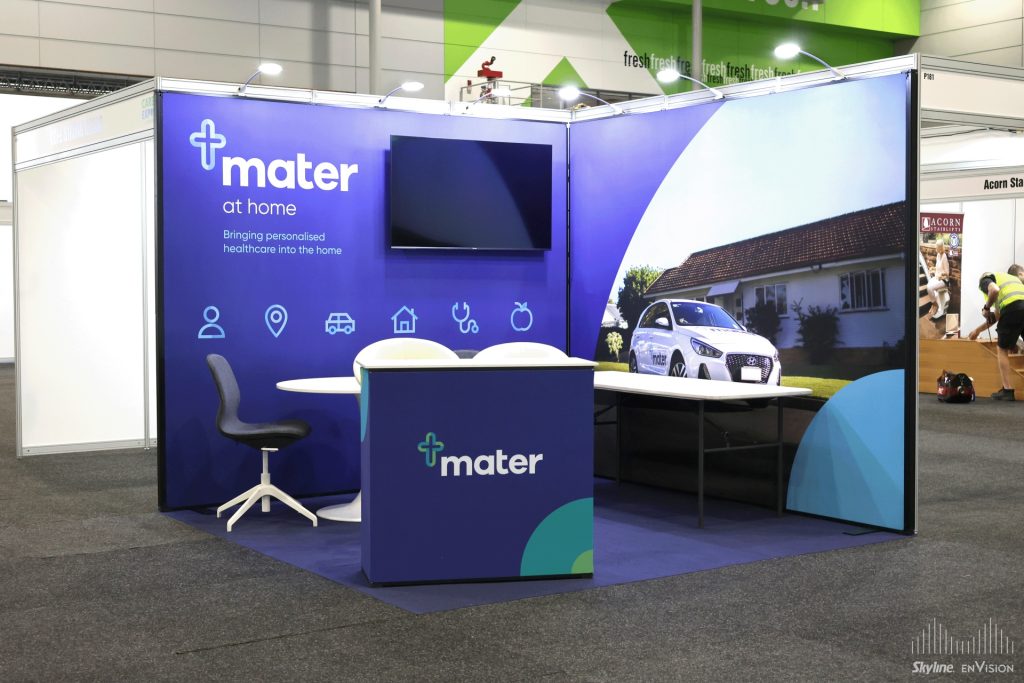
In a small booth, visuals must captivate attention without overwhelming the space. Strategic use of bold, high-contrast graphics creates immediate appeal while maintaining simplicity. Limiting the color palette helps avoid sensory overload, enabling key messages to stand out.
Incorporating clean, well-lit signage guarantees information is easily digestible from a distance. Digital displays offer dynamic content, drawing visitors in without adding physical clutter.
By prioritizing essential visuals and eliminating unnecessary elements, the booth remains open and inviting. This approach empowers exhibitors to communicate effectively, encouraging freedom of movement and engagement within a compact area.
Ultimately, balanced visual design maximizes impact while preserving spaciousness and clarity.
Maximize Your Small Booth’s Impact With Smart Design
Smart design transforms a small booth into a powerful platform that captivates and engages visitors effectively. By prioritizing functionality and aesthetics, exhibitors can create an inviting space that feels open rather than cramped.
Key strategies include:
- Optimize Vertical Space – Utilize walls for displays and storage to free up floor area, allowing visitors to move comfortably.
- Incorporate Modular Furniture – Flexible, lightweight pieces adapt to different needs, encouraging interaction without overwhelming the booth.
- Employ Strategic Lighting – Highlight key products or messages while creating an ambiance that draws attention naturally.
These approaches foster a sense of freedom within limited confines, encouraging visitors to explore and engage without feeling restricted.
Smart design ultimately maximizes impact, proving that even small booths can deliver a memorable, spacious experience.
Conclusion
To summarize, designing a small booth for exhibition events requires thoughtful planning to overcome space limitations. By carefully organizing layout and visitor flow, incorporating multifunctional furniture, and utilizing smart storage solutions, exhibitors can optimize every inch. Eye-catching visuals that avoid clutter further enhance appeal. Ultimately, a well-executed small booth design maximizes impact, attracting and engaging visitors effectively despite size constraints, ensuring a successful presence at any event.