
Lab centrifuges separate and concentrate particles by size and density for varied workflows. They range from microcentrifuges to ultracentrifuges and use fixed‑angle, swinging‑bucket, or vertical rotors to control sedimentation paths. In research they fractionate cells, organelles, and biomolecules for biochemical and imaging analyses Benchtop centrifuge. In healthcare they process blood components and support diagnostics and transfusion prep. In industry they clarify bioprocess streams, aid QC, and test materials. Further sections explain selection, safety, and troubleshooting.
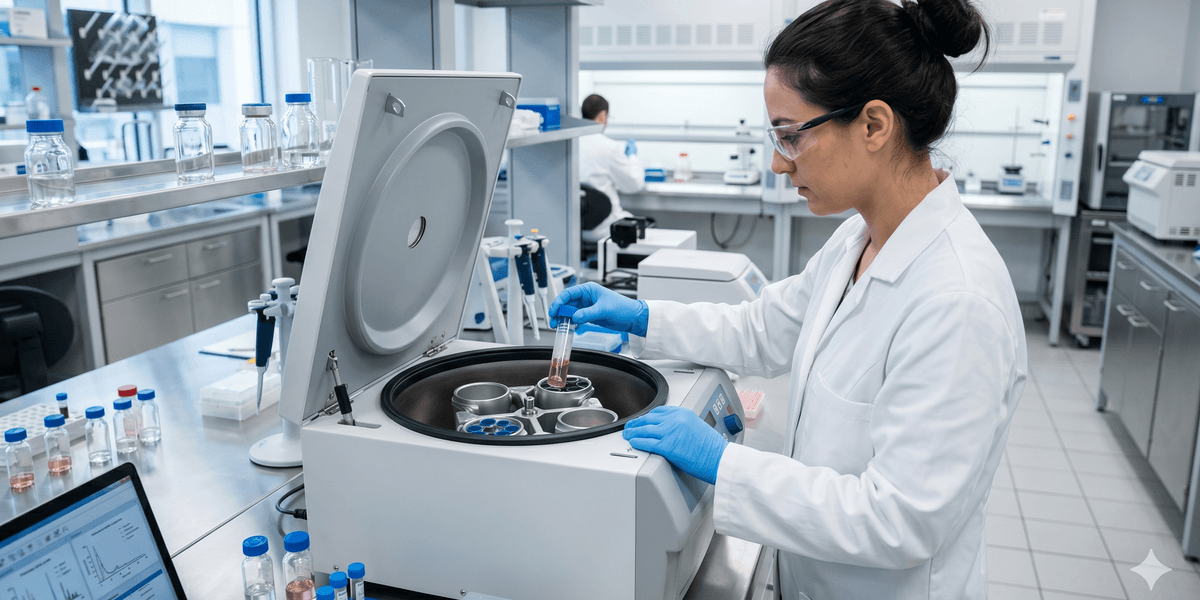
Centrifuge Basics: Types, Rotors, Speeds, and What They Do
Although often summarized as simply “spin and separate,” centrifuge operation encompasses distinct device types, rotor configurations, and speed regimes that together determine sample handling and separation outcomes.
The basic categories—benchtop, floor, ultracentrifuge, and microcentrifuge—offer trade-offs in capacity, maximum g-force, and footprint.
Rotor choices (fixed-angle, swinging-bucket, vertical) influence sedimentation paths, balance requirements https://laballiance.com.my/, and suitable tube formats.
Speed is expressed as rpm or relative centrifugal force (rcf/g); matching speeds to rotor radius and sample sensitivity avoids sample damage.
Accessories like adaptors, temperature control, and braking modes extend utility while protecting integrity.
Users seeking operational freedom benefit from understanding these variables to select equipment that aligns with throughput, precision, and experimental constraints.
Research Uses: Fractionating Cells, Organelles, and Biomolecules
When separating complex biological mixtures for analysis or isolation, researchers rely on centrifugation to fractionate whole cells, organelles, and macromolecules by exploiting differences in size, density, and sedimentation rate. Applications include differential centrifugation to pellet nuclei, mitochondria, and microsomes sequentially; density-gradient centrifugation for finer separation of organelles or ribonucleoprotein complexes; and ultracentrifugation to resolve proteins, nucleic acids, and viral particles.
Protocols are chosen to balance resolution, yield, and sample integrity, with rotor type, speed, time, and buffer composition tuned to objectives. Fractionation supports downstream assays—biochemical characterization, imaging, proteomics, and functional tests—enabling investigators to isolate components reliably and pursue experimental freedom in designing targeted analyses without conflating distinct biological entities.
Clinical Uses: Blood Processing, Diagnostics, and Transfusion Prep
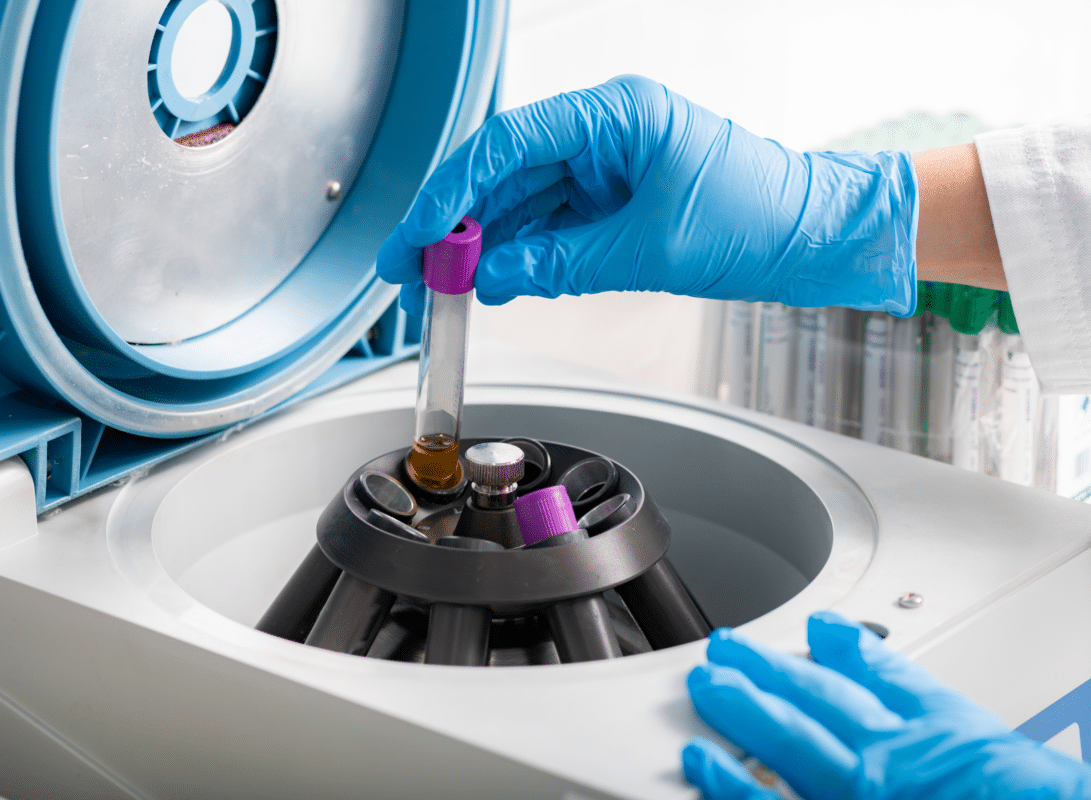
Beyond research fractionation, centrifugation is a staple in clinical laboratories for processing blood and preparing products for diagnosis and transfusion. Clinical centrifuges separate plasma, serum, buffy coat, and red cells swiftly and reproducibly, enabling accurate assays, blood typing, and pathogen detection.
Platelet-rich plasma and platelet concentrates are isolated for therapeutic use, while leukoreduction and pathogen-reduction steps often rely on centrifugal separation. Diagnostic workflows exploit sedimentation to concentrate cells and organisms for microscopy, culture inoculation, or molecular testing.
Controlled speeds, temperature, and balancing guarantee integrity and safety, reducing hemolysis and contamination. Operational flexibility permits small-scale bedside units or high-throughput hospital systems, supporting rapid turnaround and patient-centered care without compromising regulatory and sterility standards.
Industrial Uses: Bioprocess Clarification, QC, and Materials Testing
In industrial settings, centrifugation plays a central role in clarifying bioprocess streams, supporting quality control, and characterizing material properties. It separates cells, debris, and particulates from fermentation broths and cell-culture supernatants, enabling downstream purification and consistent product yields.
In quality control laboratories, centrifuges concentrate analytes, isolate contaminants, and prepare samples for assays, microscopy, and residual solvent or moisture testing.
Materials testing employs centrifugation to assess particle size distributions, sedimentation rates, and dispersion stability in paints, polymers, and suspensions.
Scale-up uses continuous and batch centrifuges tailored to throughput and product sensitivity, balancing separation efficiency with gentle handling.
The technique enhances process robustness, shortens analytical cycles, and provides reproducible, actionable data for industrial decision-making and regulatory compliance.
Choose and Operate Centrifuges Safely: Selection, Maintenance, and Troubleshooting
How should laboratories select and operate centrifuges to balance performance, safety, and longevity? Laboratories evaluate application needs, throughput, and rotor types, preferring modular designs that allow adaptation without constraint.
Safety protocols, clear SOPs, and routine training empower operators to act confidently. Preventive maintenance preserves balance, bearing life, and containment; records enable freedom from unexpected downtime.
Troubleshooting follows logical steps: isolate power, inspect rotors, verify seals, and consult manufacturer guidance before repairs.
- Match rotor capacity and g-force to sample and workflow.
- Implement scheduled inspections, calibration, and cleaning.
- Enforce loading symmetry, proper tubes, and secure lids.
- Log faults, parts replaced, and vendor communications for accountability.
Selection and operation aim to maximize utility while minimizing risk and dependence.
Conclusion
Centrifuges, across diverse rotor types and speeds, underpin research, clinical, and industrial workflows by enabling precise separation of cells, organelles, biomolecules, blood components, clarified bioprocess streams, and material fractions. Proper selection matched to application, regular maintenance, and adherence to safety and operational protocols maximize performance and longevity while minimizing risk. Continued innovation and rigorous training guarantee centrifugation remains a reliable, scalable tool for discovery, diagnosis, production, and quality control.